| |||||||||||||||||||||||||||||||||||||||||||
Fahrenheit 173 - Aged Spirits
"If it's not good enough to drink slowly, then it's not worth drinking"
Three new Swedish single malt whiskies | 19 Jun 2014 | ||

Box Pioneer (3 y.o., 48.1%):
The nose is dominated by oak but there are also notes of mint, lemon, orange, white pepper and peat. A little on the young
side but the nice fruity notes make up for that. Hopefully the prominent oak won't overpower the palate and finish! Let's see...
The palate is rich, sweet and fruity, also malty and oaky with notes of citrus and mint. Youthful but rather nice. The finish is
oaky, peppery and a little hot but it also has a refreshing note of citrus. All in all it's very mature for its age. More-ish.
An impressive first effort! The use of small casks (and partly new oak) has made it quite oaky but luckily not too oaky.
A little hot without water but adding water reveals more of the youthful character. Best neat.
(86 p)
Spirit of Hven Seven Stars #2 "Merak" (45%):
The nose is quite oaky (oak shavings) with an unusual but interesting note of juniper berries. Also notes of candy, spices,
vanilla and caramelized sugar. Also a little peat. Complex and mature. The palate is rich, sweet and smooth with orange and
quite a bit of oak (oak shavings again). A bit unusual but rather nice. Develops vanilla and even more oak. The finish is
oaky and spicy yet nice with notes of cinnamon and citrus. Lingering notes of oak and peat. All in all it's impressively complex
and mature but doesn't have much malt character (tastes more like a blend than a single). It also has a slightly perfumy oak
character (from new oak, I suspect). That said, it's smooth and more-ish and I quite like it! (But I suspect malt purists won't)
(86 p)
Smögen Primör (3 y.o., 63.7%):
The nose is young and powerful, very malty with wood smoke and a note of engine oil. Also new oak and unusual, wine-like
fruity notes. Splintered and rough with a still noticeable new make character. The palate is young, too, but more balanced
and much nicer. It has lots of malt and peat smoke, nicely offset by light, fresh notes of mint and citrus. Also a herbal note
of new oak. Sweet, fruity and enjoyable. The finish has peat and malt, of course, but also fresh notes of mint and vanilla. Nice!
All in all it's big, peaty and powerful. Well crafted but a little immature. (Improved a lot after being open for a few months)
(82 p)
Related link:
All my tasting notes on Swedish whisky
Five single malts from Cadenhead's | 6 Apr 2014 | ||
Ardmore 1997, 16 y.o. (Cadenhead Small Batch, 55.2%):
Young-ish nose with malt and a mild peatiness. The palate is light and sweet, also malty and fairly
peaty with notes of citrus, lime and mint (makes me think of a peaty mojito!). Peaty, malty, rather nice finish.
(88 p)
Balblair 1990, 23 y.o. (Cadenhead Small Batch, 51.7%):
Fragrant, fruity nose with apple, pear and melon, also honey, malt and a little oak. Very nice!
The palate is classic Balblair: rich and sweet with lovely fruity notes of citrus, apple and pear,
also oak. Rather nice finish with oak, citrus and a note of mint.
(90 p)
Glen Moray 1992, 21 y.o. (Cadenhead's Authentic Collection, 55.4%):
Nice, fruity nose with a note of honey and a faint wine character. Mild, sweet balanced palate
with notes of orange, honey and mint. Also oaky and malty which provides structure. The finish
is oaky yet mild and nice with a note of gingerbread. All in all balanced and more-ish. (Aged in claret wood.)
(88 p)
Strathisla 1987, 26 y.o. (Cadenhead Small Batch, 54.5%):
Very nice, fruity nose with mandarine orange, orange marmalade, honey and vanilla. The palate
is sweet and fruity with malt and oak providing structure in a lovely balance. The finish is oaky and spicy
with a note of mint, simplistic but nice. All in all smooth, beautifully balanced and very more-ish.
(90 p)
Strathmill 1995, 18 y.o. (Cadenhead's Authentic Collection, 54.4%):
The nose is grassy and farmy with notes of hay and old barn, also fruity with apple and melon. Incongruous.
The palate is nicer: sweet and fruity with notes of citrus (mandarine orange) and mint. Develops oak.
Nice, oaky finish with a note of mint. All in all uneven with a disappointing nose.
(84 p)
Related links:
All my tasting notes on whisky from Cadenhead's
Cadenhead's shops: UK,
DE (Berlin),
DE (Köln),
CH,
DK
World whisky | 19 Jan 2014 | ||

St. George Peated (England, 43%):
The nose is quite peaty and malty. Young, rough and a little musty. Also fruity and spirity (like a fruit schnapps).
The palate also shows youth but is nicer than the nose: it's sweet and fruity (again, fruit schnapps), also peaty.
Peaty finish with fresh notes of mint and citrus. All in all young and rough. Nice finish, though.
(81 p)
Mackmyra Svensk Rök (Sweden, 46.1%):
Nice, sweet-ish smoke on the nose but unfortunately it's also floral and perfumy (from a little too much new oak, I suspect).
Fruity (citrus), malty and nutty. Youthful yet complex. The palate is sweet with a prominent oak character and a note of
gingerbread. The finish is peaty, quite oaky and spicy with nice refreshing notes of mint and citrus. Verdict: it has a nice,
unusual peatiness but the oak character is a bit vulgar.
(82 p)
Spirit of Hven Seven Stars #1 "Dubhe" (Sweden, 45%):
The nose has caramelized sugar and vanilla, also oak, malt, a little peat and a hint of cinnamon. Quite nice but unfortunately
there's also a musty off-note. The palate is light and sweet with orange, malt and oak. Young-ish yet balanced. Light and
sweet at first, then develops spices and a little heat. The finish has at first citrus and mint, then lingering notes of oak,
gingerbread and black pepper. Also a little peat. All in all youthful yet complex and balanced.
(85 p)
Slyrs 2007, 3 y.o. (Germany, 43%):
The nose is fragrant, fruity and quite oaky with notes of new oak, vanilla and marzipan. Nice but too oaky. The palate is
hot and quite oaky but with a drop of water it's light and sweet with fresh notes of lemon and orange. Still oaky, though
(oak shavings). The finish is oaky too, with notes of vanilla and black pepper. All in all it's rather nice for a 3 y.o. (but
I would have preferred more time in less active wood). Compared to the 2006 vintage it's less complex and not as nice.
(85 p)
Mackmyra Special:08 (Sweden, 46.0%):
Herbal, aromatic nose with new oak, malt, allspice and orange candy. Unusual yet rather nice. Mild, sweet
palate with vanilla and citrus. Fresh. Develops menthol, then oak. The finish has oak and citrus at first,
then grows spicy (allspice, again). All in all unusual, interesting and rather nice. More-ish.
(86 p)
Hammer Head 1989, 21 y.o. (Czech Republic, 40.7%):
Fragrant, fruity and slightly floral nose with lemon, vanilla, cinnamon and white bread (cinnamon bun). Unusual but
rather nice. The palate is mild and sweet. Quite oaky from the new oak but not too much. Rather nice, actually.
Oaky finish with cinnamon and a little citrus. Nice but short. All in all it's unusual with interesting character from the
fresh oak - yet perhaps a little too oaky. (Thanks to Magnus for the sample!)
(86 p)
Amrut Intermediate Sherry (India, 57.1%):
Fragrant, fruity nose with raisins, plum compôte and notes of mint and gingerbread. Very nice! The palate is fresh, fruity and
clean, neither sweet nor dry. Lighter and fresher than the nose suggested. Very nice and quite more-ish. The finish is oaky,
spicy and a bit simple - disappointing after the nice nose and palate. All in all very nice and more-ish but a little uneven.
(87 p)
Kavalan Concertmaster (Taiwan, 40%):
Malty, fruity and oaky nose with a prominent port influence. Also notes of vanilla and gingerbread. Lovely! The palate
is medium-bodied, oaky and winey with a note of orange. Neither sweet nor dry. Oaky, fairly dry finish with a note of
gingerbread. All in all unusual but very nice and very nicely balanced. Mature beyond its years. Impressive!
(88 p)
Related link:
All my tasting notes on world whisky
Six Irish whiskeys | 15 Jan 2014 | ||
Green Spot (pot still, 40%):
The nose is oaky and nutty with notes of oak shavings, dessert wine, crème brûlée and orange candy. Splintered
and a little vulgar. The palate is nicer: smooth, sweet and chewy with notes of sherry, lemon and orange marmalade.
The finish is dry, oaky, spicy and nutty. All in all complex with lots of flavour but not entirely convincing. Difficult to grasp.
(85 p)
Yellow Spot 12 y.o. (pot still, 46%):
Fragrant, fruity, fresh nose with notes of apricot, oak shavings, linseed oil and créme caramel. Also a hint of Trinidad rum.
Complex but not entirely balanced. The palate is hot but with a drop of water it's light, sweet and smooth. Complex and
nicely balanced with notes of custard and orange. Develops oak and a note of marzipan. Very nice! The finish has
a bit of oak and a note of vanilla but it short and disappointing. All in all it's uneven and a bit splintered.
(Aged in bourbon, sherry and Malaga casks)
(86 p)
Tullamore Dew 12 y.o. (blended, 40%):
Nice nose with oak, allspice, hay, citrus fruits and custard. The palate is balanced, smooth, sweet and very mild with
notes of custard and honey. The finish has oak, mint and honey, also notes of apricot and peach (from the pot still
component). All in all very smooth with an excellent balance. It's more-ish and goes down very easily!
(87 p)
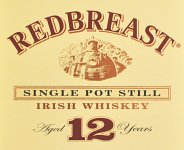
Redbreast Single Pot Still 12 y.o. (40%):
Big nose with peach, marzipan and oak. Very fruity palate with a fresh note of vanilla.
Lighter than expected at first but grows richer as it develops oak and spices.
The finish is fairly oaky with peach, marzipan and a note of mint.
Lighter, cleaner and more easy drinking than the other expressions of Redbreast.
(87 p)
Powers John's Lane 12 y.o. (pot still, 46%):
Fresh, fruity and oaky nose with the typical fruity pot still character. A little spirity without water. With water it develops
almonds, marzipan, custard and more oak. Also a note of bourbon. The palate is fresh and quite fruity (orange marmalade),
also custard and honey. Oaky and spicy with a dry, rye-like note. The finish has marzipan and oak. A little peppery.
All in all it has lots of flavour but it's not quite balanced. It's a little splintered but entertaining and rather nice.
Best with a drop of water (too hot and spicy without it).
It has more power (heh) than Redbreast and Green Spot.
(87 p)
Midleton Barry Crockett Legacy (pot still, 46%):
The nose is quite oaky, dense and heavy but with nice notes of marzipan and peach. The palate is unexpectedly
light and smooth, subtle and balanced, with very nice notes of vanilla, peach, apricot and almonds. The finish is oaky
with a note of peppermint. Very nice! All in all very nice and very more-ish. Not quite worth the price, though.
(89 p)
I had high expectations of Green Spot and Yellow Spot but I was surprised that they didn't score higher than they did. It seems to me that the producers (Mitchell & Son, Dublin) try too hard with the aging in different wood types - it makes the whisky unfocused and splintered and hides most of the pot still character.
On the other hand, the Tullamore 12 was a positive surprise! It's the cheapest of these whiskies and the best value. (I wasn't sure about including it here since it's a blended whisky and all the others are pot still, but it definitely held its own.)
Related link:
All my tasting notes on Irish whiskey
— o — | |||
More articles:
Four single malts and a single grain from Cadenhead's
A review of Girvan 1979 (single grain), Glencraig 1981, Glen Elgin 1991 (rum cask), Highland Park 1985 and Royal Lochnagar 1996 (rum cask).
Five single malts starting with T
A review of single malts from Tamdhu, Tamnavulin, Tomatin, Tomintoul and Tormore.
Seven bottlings of calvados
A review of calvados from Christian Drouin, Domaine Dupont, Roger Groult, Le Père Jules, Père Magloire, Pierre Huet and La Ribaude.
Rare single malts from closed distilleries
Banff, Caperdonich, Convalmore, Glenlochy, Inverleven and Lochside.